
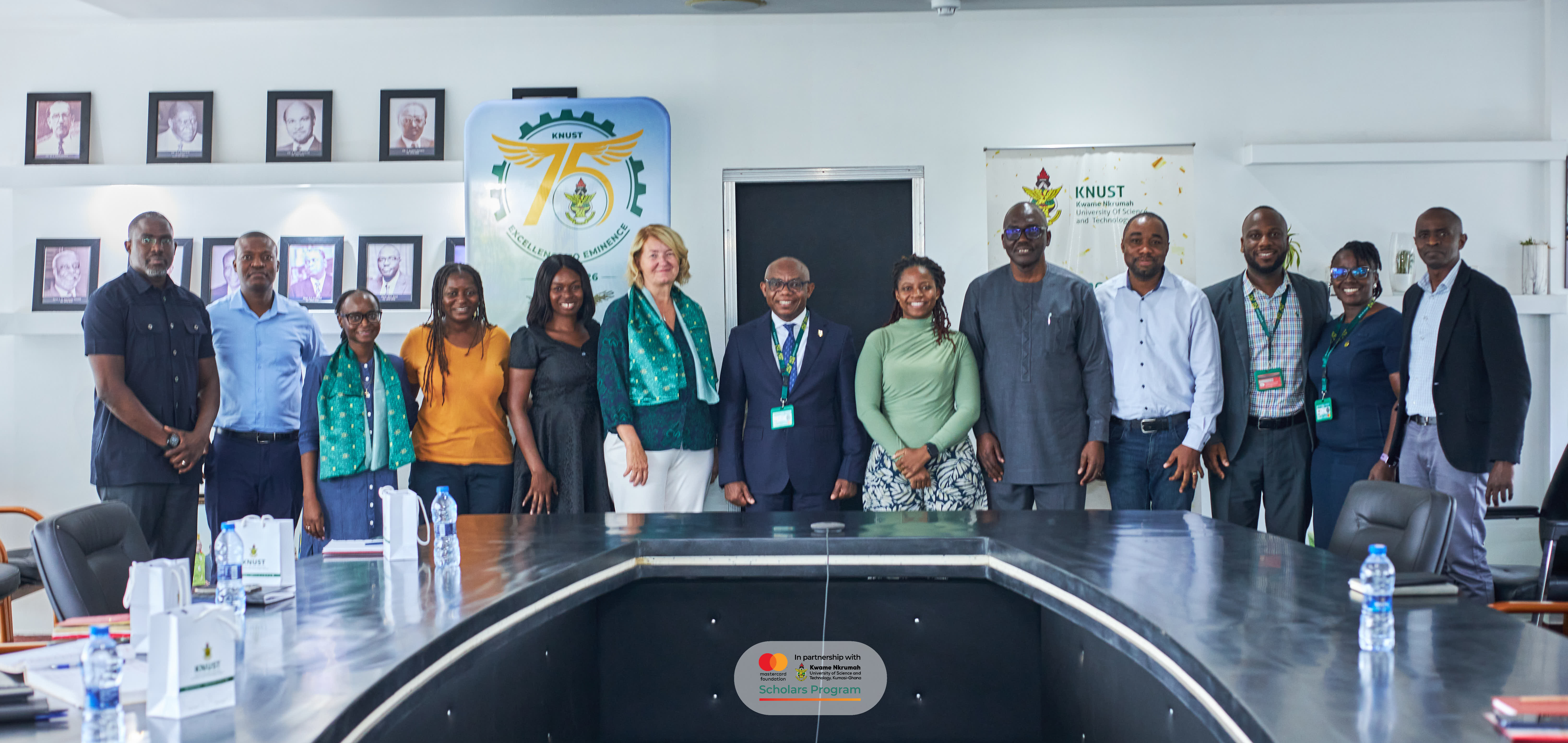
The Mastercard Foundation’s Africa Higher Education for Transformation (AHEFT) Prize team has visited the Kwame Nkrumah University of Science and Technology, Kumasi (KNUST) to explore opportunities for deeper collaboration following the University’s recognition as winner of the Best in Research and Innovation category.
The engagement focused on building on KNUST’s recognition to strengthen research commercialisation, policy uptake and collaboration among African universities.
Vice-Chancellor Professor Christian Agyare described the award as an affirmation of KNUST’s research and innovation drive and said the University remained committed to strengthening its partnership with the Mastercard Foundation.
“For us, our mandate is to live up to expectations to be a globally eminent university that engineers the future through science, technology and innovation, as clearly captured in our vision,” he said.
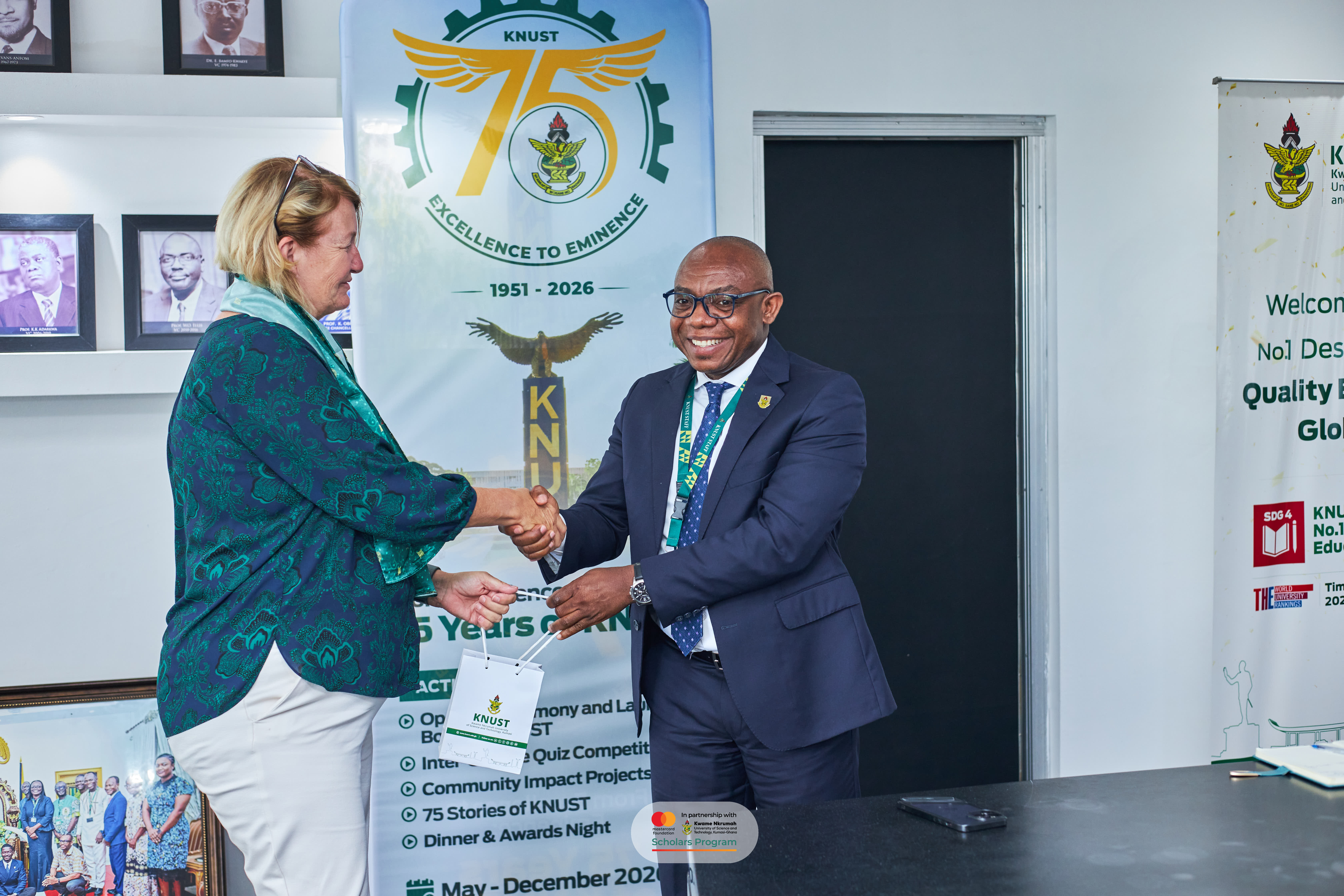
Kim Kerr, Focal Person for the AHEFT Prize, congratulated KNUST on the recognition and commended the University for producing impactful research with available resources.
She said the initiative was looking beyond individual institutional recognition towards building stronger networks among universities across Africa.
“This is a new initiative that has the intent to create a network of world-class universities that are really rethinking and transforming higher education for the purposes of advancing social and economic development,” she said.
The delegation also engaged some of KNUST’s research, innovation and enterprise centres to understand how the University translates research into practical solutions and identify areas where collaboration could accelerate commercialisation and policy impact.

The engagements covered KNUST’s work in engineering and technology transfer, biomedical research, responsible artificial intelligence, research funding and grants management, laboratory services, digital learning and business incubation.

Among the facilities visited were the Technology Consultancy Centre, Kumasi Centre for Collaborative Research in Tropical Medicine, Responsible Artificial Intelligence Lab, Office of Grants and Research, Central Laboratory, E-Learning Centre and Kumasi Business Incubator.
Discussions between the AHEFT Prize team and KNUST also centred on developing pathways for research outputs to move beyond academia into industry, enterprise and public policy.
The two sides further explored opportunities to strengthen inter-university collaboration and contribute to a network of African higher education institutions using research and innovation to address social and economic challenges.
The engagement forms part of efforts to translate KNUST’s AHEFT Prize recognition into sustained partnerships and wider impact across Africa’s higher education and innovation ecosystem.


